Winter Care Guide
Keep Your Wheel Loader Running Strong in Cold Weather!
Winter is here – is your loader ready? Follow this comprehensive guide to maintain efficiency and reliability through the cold months.

Engine System
Proper Cold Weather Starting & Operation
Cold weather puts extra strain on your loader's engine. Follow these guidelines for optimal performance.
❄️
Cold Starts
Limit to ≤8 seconds per attempt. If unsuccessful, wait 1 minute before trying again.
🔥
Preheating
Below 5℃? Pre-heat engine with hot water/steam to 30-40℃ before starting.
⚡
Operating Temperatures
Only operate at full load when coolant ≥55℃ and oil ≥45℃. Never exceed 95℃ coolant/oil or 110℃ torque converter oil.
5℃
Start pre-heating below this temperature
55℃
Minimum coolant temp for full load
95℃
Max safe coolant/oil temperature
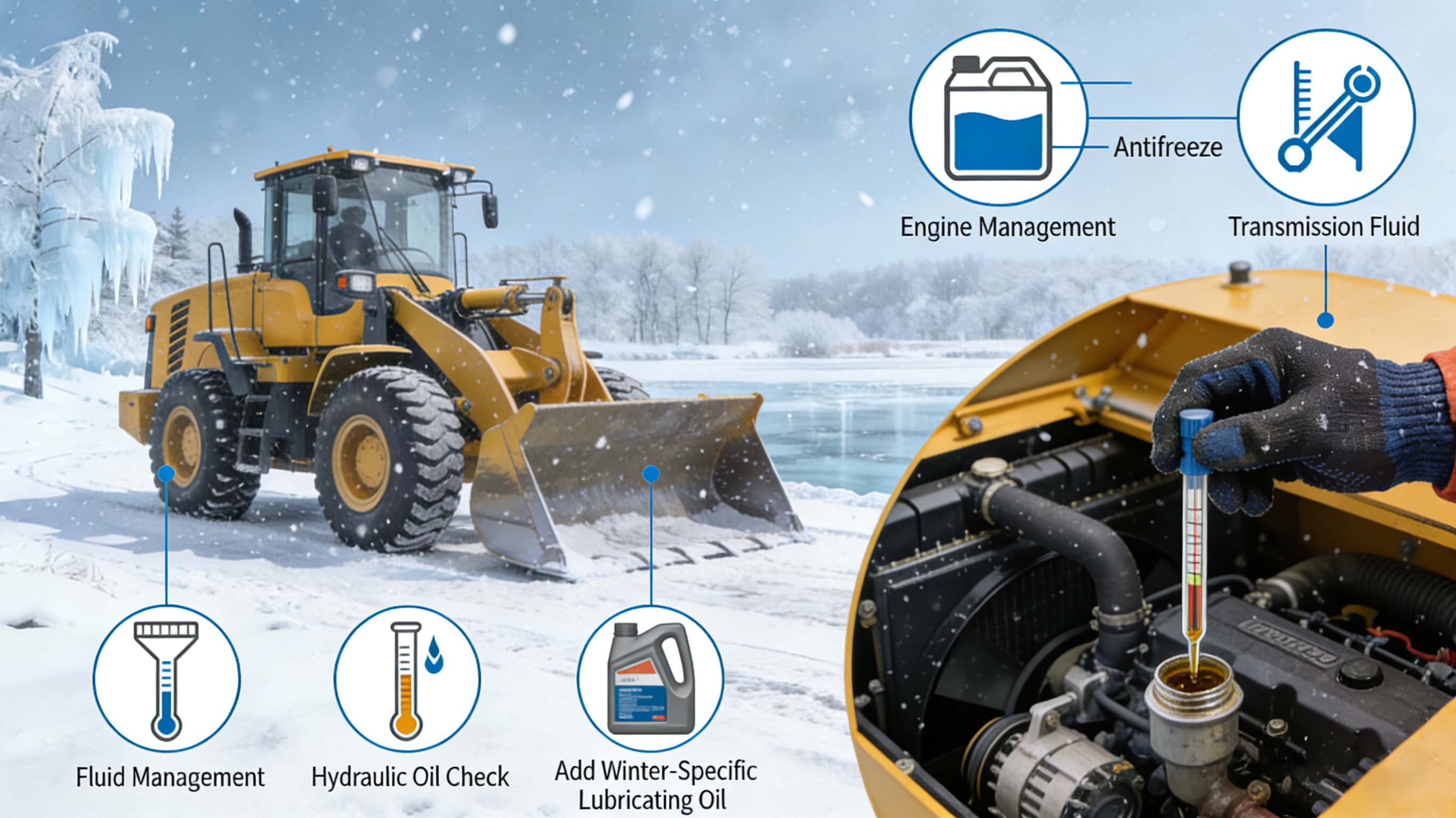
Fluid Management
Winter-Grade Fluids for Optimal Performance
Proper fluid selection and maintenance are critical for cold weather operation.
🧊
Antifreeze Selection
Use antifreeze rated for your local lowest temperatures (commonly -35℃). Never mix different antifreeze colors!
⏰
Replacement Schedule
Replace antifreeze every 2000 hours or 1 year, whichever comes first.
🛢️
Winter Oils
Switch to low-viscosity hydraulic and transmission oils specifically formulated for cold weather operation.
⚠️ Critical Warning
Never mix different colors of antifreeze! Chemical incompatibility can cause gelling, corrosion, and serious engine damage.
Tire Care
Maintaining Traction & Safety
Proper tire maintenance is essential for safety and performance on winter surfaces.
💨
Air Pressure
Inflate to standard pressure (don't over-reduce in cold). Always inflate tires when cold, not after operation.
🧹
Daily Maintenance
Clear tread debris daily to prevent punctures and maintain optimal traction.
⛓️
Winter Traction
Consider winter tires or chains for icy surfaces. Snow chains can improve traction by up to 300%.
Pro Tip
Check tire pressure at the start of each shift when tires are cold. Pressure changes approximately 1 PSI for every 10°F temperature change.
Battery & Electrical
Preventing Cold Weather Power Failure
Batteries can lose up to 60% of their capacity in freezing temperatures.
🔋
Pre-Winter Testing
Load test battery before winter begins. Clean terminals and connections thoroughly.
⏱️
Regular Operation
Start and run equipment for at least 30 minutes every 15+ days if unused during winter.
🔌
Long-Term Storage
Disconnect negative terminal for storage. Keep batteries fully charged and consider a battery maintainer.
Before Winter
Load test and clean all battery connections
During Storage
Run engine every 15+ days for 30 minutes
Long Storage
Disconnect negative terminal completely
Hydraulics & Attachments
Smooth Operation in Freezing Conditions
Hydraulic systems are particularly vulnerable to cold weather performance issues.
🛢️
Oil Selection
Use low-temperature hydraulic oil specifically formulated for winter operation.
🔄
Warm-Up Procedure
After startup, cycle all hydraulic cylinders 5-10 times unloaded to warm the oil gradually.
🛢️
Regular Lubrication
Lubricate all moving parts regularly with winter-grade grease.
Hydraulic System Protection
Consider installing a hydraulic oil heater for extremely cold climates (-20℃ and below) to prevent viscosity-related performance issues.
Operation & Storage
Cold Weather Best Practices
Adapt your operation and storage practices for winter conditions.
🚜
Driving Technique
Use gentle steering and braking on snow/ice. Allow 3-4x more stopping distance.
❄️
Freezing Protection
Below 0℃: drain coolant if no antifreeze is used. Never use plain water in freezing temperatures.
🏠
Storage
Park indoors if possible. For electric loaders, keep battery charge above 20% at all times.
Safety Tips
Protecting Operator & Equipment
Winter conditions require additional safety considerations for both operator and equipment.
🔥
Cab Heating
Open heater valve before using cab heating. Use internal air circulation for faster warming.
💡
Visibility
Ensure adequate worksite lighting. Winter days are shorter with reduced visibility.
💧
Moisture Control
Drain air tank moisture daily to prevent freeze-ups in brake lines and pneumatic systems.
⚠️ Air System Warning
Failure to drain air tanks daily can cause frozen air lines, resulting in complete brake failure. This is a critical safety issue!
Winter Maintenance Pays Dividends
Proper winter care keeps your loader productive, reliable, and safe throughout the cold months. Preventive maintenance beats emergency repairs every time – it's a smart investment for long-term returns!
Increased Uptime
Reduce winter-related breakdowns by up to 80%
Cost Savings
Prevent expensive cold weather damage repairs
Enhanced Safety
Protect operators and equipment in harsh conditions
Longer Lifespan
Extend equipment life with proper seasonal care