【Veteran's Tip】Why Your Loader MUST Change Hydraulic Oil Regularly!
💡
The Critical Analogy: Your Loader's Lifeblood
Simply put, hydraulic oil is your loader's "blood" – powering lifts, digs, steering, and lubrication throughout the system. Just as contaminated blood causes health problems, degraded hydraulic oil causes equipment failure.
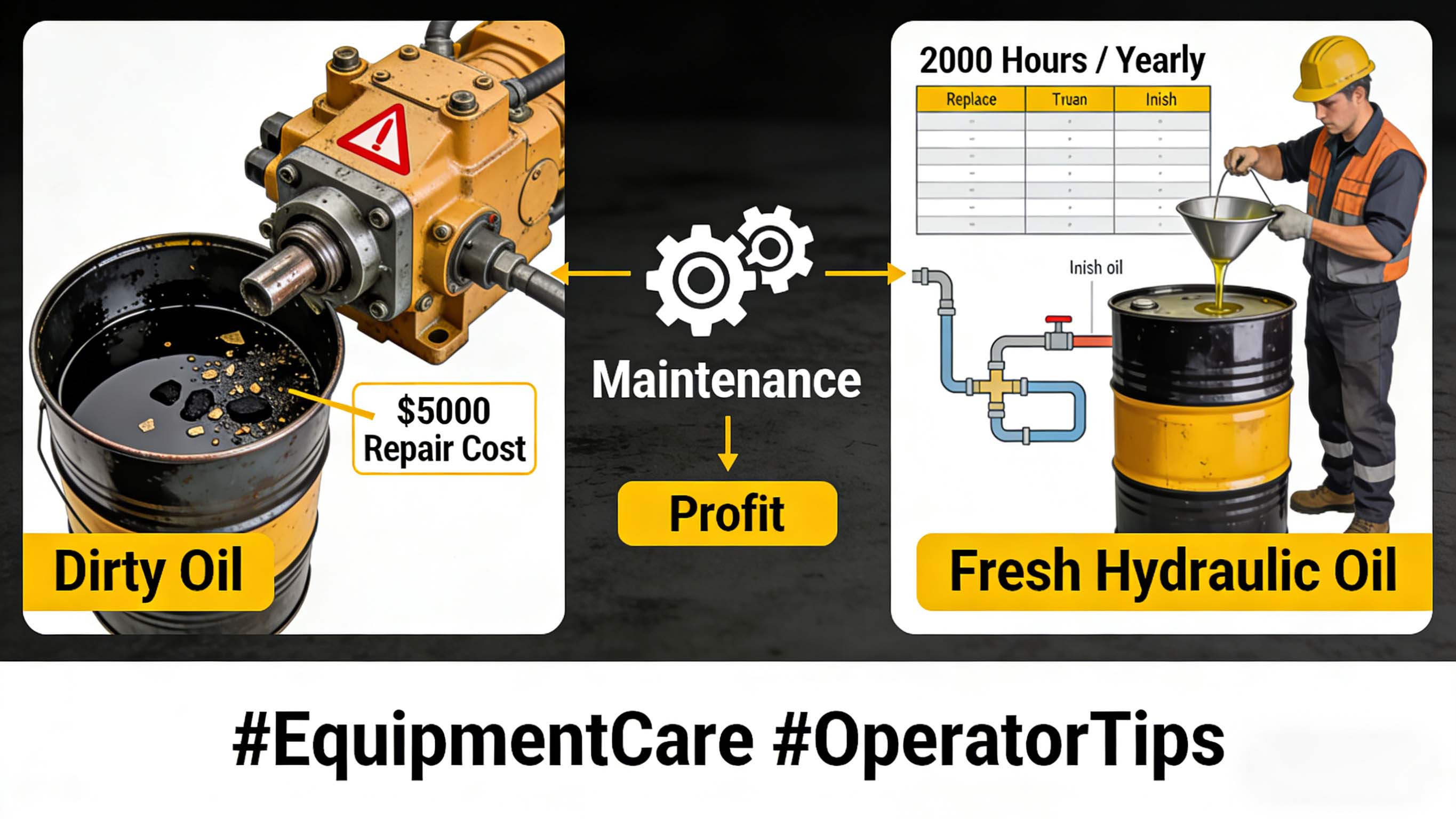
Hydraulic oil works under extreme conditions daily: temperatures reaching 82°C+ (180°F+) and pressures exceeding 3,000 PSI. This harsh environment causes the oil to gradually "sour" and accumulate contaminants.
Like clean, healthy blood circulating through veins
Optimal viscosity for power transfer
Effective heat dissipation
Proper lubrication of components
Corrosion protection
Contaminant-free operation
Like contaminated, sludgy blood causing system failure
Metal shavings from component wear
Dust and particulate contamination
Oxidation and chemical breakdown
Water contamination (from condensation)
Additive depletion
The Dire Consequences of Skipping Changes
Skipping hydraulic oil changes doesn't just reduce performance – it actively destroys your equipment from the inside out.
Weak digging power, unstable steering, slow response times, and reduced lifting capacity.
Abrasive particles grind down precision parts: pumps, valves, cylinders, and seals.
Degraded oil loses cooling ability, causing system overheating and accelerated wear.
Hydraulic pump replacement: $3,000-$8,000. Cylinder rebuild: $500-$2,000 each.
The Real Cost of Neglect
Dirty hydraulic oil acts like liquid sandpaper, grinding away at your most expensive components. The repair bill will make oil changes look like pocket change.
Result: 10-30x higher cost for neglecting basic maintenance
The Smart Maintenance Schedule
Whichever comes first. This isn't a suggestion – it's the minimum requirement for protecting your investment.
When to Change MORE Frequently:
Extreme conditions: Dusty sites, high temperatures, continuous heavy use
Water contamination: If system has been exposed to moisture
Overheating incidents: After any significant overheating event
Visible degradation: Milky, dark, or foul-smelling oil
Simply draining and refilling isn't enough. Follow these steps for maximum benefit: