Backhoe Loader Buyer’s Guide: Specs, 2WD‑4WD & Comfort Cab Tips
Backhoe Loader Buyer's Guide: How to Select High‑Performance Units for Your Project
Backhoe loaders remain one of the most versatile multi‑purpose construction machines, integrating front‑end loading and rear excavation functions in a single wheeled chassis. For B2B buyers including contractors, rental fleet operators, municipal works and agricultural enterprises, selecting a suitable backhoe loader directly impacts project productivity, total‑cost‑of‑ownership (TCO) and long‑term return on investment. This buyer’s guide covers industry outlook, core technical indicators including cab comfort and drivetrain performance, practical selection advice and frequently asked questions to help international purchasers make informed procurement decisions.
Global Backhoe Loader Market Background & Key Trends
The global backhoe loader market maintains steady expansion driven by worldwide infrastructure investment, urban renewal and rural utility construction. The market reached approximately USD 11.3 billion in 2026 and is forecast to keep growing at a CAGR above 6% in the next decade. Emerging economies across Asia‑Pacific, Africa and Latin America represent the fastest‑growing consuming regions, as road building, water‑supply trenching and site‑preparation projects raise demand for cost‑effective multi‑functional equipment.
Three major trends are reshaping backhoe‑loader purchasing decisions for 2026‑2030. First, buyers are shifting focus from pure upfront price toward total‑cost‑of‑ownership, prioritizing fuel‑efficient engines, reliable hydraulic systems, easy‑to‑source spare parts, as well as operator‑friendly cab configurations. Second, mid‑size wheeled backhoe loaders with balanced digging and loading capacity dominate cross‑sector applications; these machines handle trenching, material stacking, land clearing and municipal maintenance without deploying separate excavators and wheel loaders. Third, drivetrain flexibility and operator comfort have become critical differentiators. 2WD/4WD switchable transmission, air‑conditioned cabins, safety auxiliary cameras are increasingly standard options, reducing operator fatigue and improving adaptability across complex job‑site conditions, from narrow urban work zones to uneven off‑road terrain.
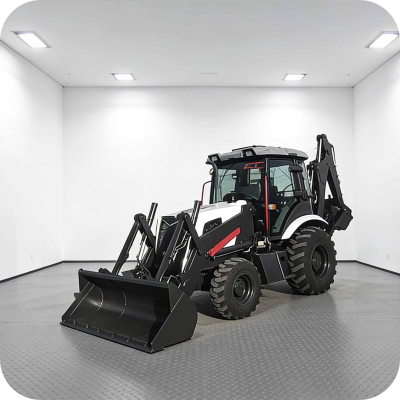
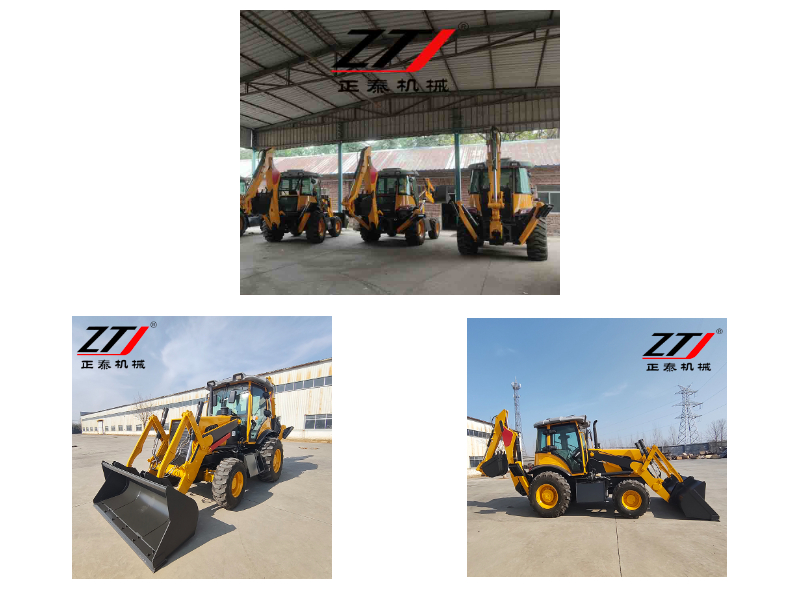
Chinese construction‑machinery manufacturers are playing an increasing role in global supply chains, delivering well‑spec’d mid‑range backhoe loaders for overseas B2B clients. Taian Zhengtai Construction Machinery, based in Shandong Province, produces robust backhoe loaders targeting international buyers, with full‑range performance parameters validated through factory bench testing and field simulation before shipment. During manufacturing, critical assemblies including the Cummins 75 kW engine, switchable 2WD‑4WD transmission, main hydraulic circuits, boom‑stick structures and heavy‑duty axles go through multi‑stage quality inspection. The fully‑fitted operator cab with air‑conditioning, sunroof and rear‑view camera is assembled and tested in‑house, ensuring consistent performance and operator safety under continuous site operation.
Core Technical Specifications to Evaluate When Buying a Backhoe Loader
When comparing different backhoe‑loader models, B2B purchasers should match machine parameters to real‑world working scenarios instead of blindly pursuing maximum values. Below are must‑check indicators, referenced against Zhengtai’s mid‑size backhoe loader (operating weight 7840 kg).
1. Power, Drivetrain and Weight Foundation
Engine output determines overall machine responsiveness. The 75 kW Cummins diesel unit offers stable power output for mixed digging‑loading cycles.
Equipment weight (7840 kg) supports rated lifting force over 25 kN and maximum traction power of 70‑75 kN, critical for slope operation and heavy‑material handling. The unit achieves over 30‑degree grade‑ability, suitable for hilly and rural construction sites.
2. Backhoe (Digging‑End) Performance
Focus on maximum digging depth, digging radius and digging force. This model delivers maximum digging depth of 4340 mm, ground‑level digging radius 5105 mm, digging force 50 kN (±10 %), and 180‑degree bucket swing angle, well‑suited for trench digging, pipeline laying and foundation excavation. The 750 mm‑width digging bucket fits most standard trenching requirements.
3. Loader (Front‑End) Performance
Key metrics include rated loading‑bucket capacity (1 m³), maximum breakout force >40 kN, maximum dump height 2626 mm and dump reach 726 mm. These figures define how efficiently the machine piles, loads and discharges soil, gravel and construction debris. Bucket angles for transport, digging and dumping directly affect cycle efficiency during repeated loading tasks.
4. Cab Comfort & Safety Configuration
Operator environment heavily influences daily work efficiency and safety, especially for long‑shift rental and municipal projects.
5. Dimension and Site Adaptability
Overall dimension: length 7100 mm, width 2730 mm, cab height 2870 mm; minimum turning radius 4300 mm, minimum ground clearance 500 mm. Good ground clearance and compact turning performance enable operation on uneven ground and semi‑confined work zones. Tank capacities: hydraulic tank 155 L, diesel tank 100 L, supporting long continuous shifts without frequent refuelling or hydraulic‑oil top‑ups.
Beyond datasheet numbers, buyers need to assess local compliance requirements such as emission standards, operator‑cab safety norms and parts‑supply accessibility in target‑import regions.
Practical Selection Principles for B2B Buyers
Before requesting quotations, clarify your actual operating scenarios:
Primary application: municipal trenching, farm land improvement, building‑site material handling, or rental‑fleet business?
Typical site conditions: flat paved yards, muddy uneven ground, hilly terrain or narrow urban sites? If sites frequently alternate between highway transit and off‑road muddy work, prioritize models with flexible 2WD/4WD switchable transmission.
Expected daily working hours: long‑hour continuous operations should prioritize air‑conditioned, ergonomic cabs to reduce operator fatigue.
Avoid over‑specifying. Buying an excessively large backhoe loader increases purchase cost, fuel consumption and transport expenses. Conversely, under‑spec units suffer overloading risk and premature component wear. For rental‑fleet buyers, prioritize models with universal attachment compatibility, comfortable safety‑oriented cab configurations and globally‑available spare‑part resources to lower downtime.
FAQ: Frequently Asked Backhoe Loader Buyer Questions
Ready to Source Your Backhoe Loader?
Selecting the right backhoe loader is a balance of market trend awareness, technical‑spec evaluation and real‑site requirement matching. Modern procurement is no longer only about digging force and bucket volume; drivetrain flexibility, cab comfort and safety features play vital roles for day‑to‑day operation.
If you are sourcing reliable mid‑size backhoe loaders equipped with air‑conditioned cab, sunroof, reversing camera and switchable two‑four wheel drive, send your detailed project requirements including target working depth, typical site terrain, quantity and destination country.
Our team can share full spec sheets, factory reference cases and tailored quotations to support your purchasing decision.
WhatsApp / Wechat: +86 13953879973
Email: woniuniu9527@163.com
Disclaimer: All performance data cited comes from manufacturer official specification documents. Actual field performance will vary with operating habits, ground conditions and maintenance status.