How to Pick Loader Tonnage For Your Job Site
How to Pick Loader Tonnage For Your Job Site
Shopping for a wheel loader? Don’t just grab the biggest machine your budget can buy.
Size matters, but matching the loader to your actual work is what wins. Get a machine too small. You’ll run endless extra passes and miss your production targets. Go too large. You burn extra fuel, tear up tires faster, and waste cash on unnecessary maintenance.
This guide works for contractors, quarry operators, farmers and equipment dealers. Your ideal wheel loader depends on what material you move, your site layout, travel distance, workload, and attachments you plan to use.
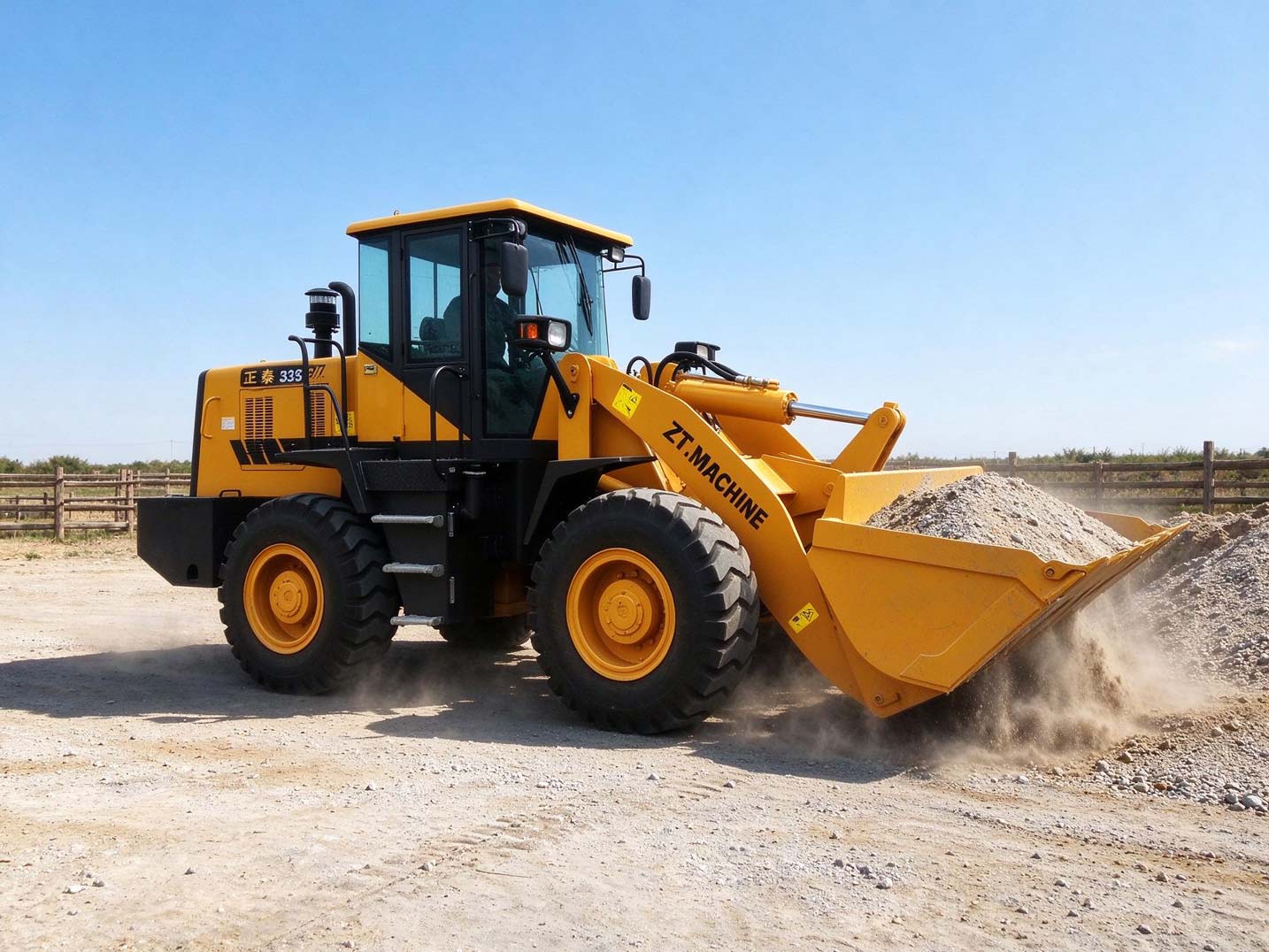
Why your site conditions make all the difference
Wheel loaders show up on construction sites, aggregate yards, mines, farms, ports and waste yards. Every job pushes the machine in different ways. Loading loose dirt on flat ground is nothing like digging dense rock out of a quarry pit.
Market data shows construction, infrastructure, mining and material handling drive most loader sales. One 2025 report says medium wheel loaders take up around 45% of the global market. They’re super versatile. Still, this is just a market trend. It does not guarantee results for your local project.
1. Material density & target payload
Start with the material you load most often. Note its density, moisture level and any variations. Sand, gravel, topsoil, coal, demolition rubble and blasted rock all create different payloads — even using the same bucket.
Quick formula to estimate: Payload per cycle = bucket capacity × material density × bucket fill factor
Fill factor shifts based on material type, bucket design, operator skill and site conditions. Use this number as a rough estimate. Double-check against manufacturer specs. Run an on-site trial if you can.
Compare your expected payload to the loader’s rated load and stability limits. Check the full setup: tires, counterweight, bucket or attachments and lift height. A bucket with a large volume rating does not mean it can safely carry heavy material.
2. Match your bucket to trucks and receiving gear
A loader is just one piece of your material-handling system. If you load dump trucks, hoppers or crushers, think about how much your receiving gear can handle. Count bucket loads needed to fill it.
A bucket that’s too small slows every loading cycle. An oversized bucket causes spills, uneven truck loads and extra stress on your loader. Your chosen loader tonnage needs to fit your full loading workflow, not just look impressive on spec sheets.
Before you buy, confirm these details:
Hourly or daily production target
Typical truck or hopper capacity
How many bucket loads fill one truck
Average loading and moving distance
Other jobs the loader will handle during shifts
Medium loaders shine for mixed tasks. But your production goals and site conditions make the final call.
3. Terrain, traction and travel distance
Ground conditions decide how much of the loader’s rated capacity you can actually use. Mud, loose stone, soft soil, slopes and bumpy ground change traction, cycle times and tire wear. A loader that works perfectly on solid flat ground can struggle on stockpiles or wet quarry roads.
Check the route between loading and dumping points. Look at slopes, turning room and ground quality. Long travel distances make fuel use and cycle time much more important. Tight work sites need nimble machines. High-volume jobs need larger loaders with strong traction and breakout force.
If you work on slopes or uneven ground, ask your supplier to confirm safe operating limits for your machine setup. Safe payload depends on load position, attachments, turning movement and ground surface, not just machine weight.
4. Work intensity, lift height and attachments
A loader doing light yard work has totally different needs from one running full shifts in a quarry. For heavy continuous work, pay close attention to the engine, hydraulics, cooling system and service intervals. Also confirm local spare parts and technical support are easy to access.
Lift height and dumping reach are easy to overlook. A loader’s lifting capacity on flat ground drops when loading high-sided trucks, hoppers or containers. Make sure your selected machine can hit your required height safely.
Attachments shift machine balance and usable payload. Forks, grapples, high-lift booms and special buckets change the center of gravity and lifting power. When you ask for quotes, share your attachments, materials and working height.
5. Productivity and total running cost
Bigger loaders shift more material per bucket. But they burn more fuel, need heavy-duty tires and cost more to maintain. Smaller loaders cost less upfront. Yet they need more work cycles and labor to hit your production goals.
Compare different models using the same benchmarks:
Estimated tonnes moved per hour
Fuel consumption per working hour
Annual operating hours
Tire, maintenance and repair costs
Local spare parts and service support
Purchase, rental or financing cost
Resale value and compatibility with your existing fleet
Telematics and onboard weighing tools track payload, cycle time, fuel use and machine usage. This data tells you if your loader sits idle, runs overloaded, or fits your job perfectly.
Simple step-by-step loader selection process
List your main materials and estimate their density
Lock in your production target and confirm truck / hopper capacity
Measure travel routes, slopes, ground conditions and available workspace
Define lift height, dumping reach and required attachments
Compare payload, cycle time, fuel use and maintenance costs for shortlisted machines
Review the machine configuration with your supplier. Arrange a site trial if possible.
FAQ
What loader tonnage works best for construction sites?
There is no one-size-fits-all answer. Your choice depends on materials, output targets, truck size, ground conditions and site space. Medium loaders handle mixed tasks well. Tight or high-volume sites may need a different model.
Should I get a bigger bucket to boost productivity?
Not always. Large buckets speed up work for light materials. Dense heavy material can quickly hit payload or stability limits. Always check bucket capacity, fill factor and loader limits for your exact setup.
How do attachments affect loader tonnage selection?
Attachments change machine weight, center of gravity and lift height. Forks, grapples and high-lift arms usually reduce usable payload. Factor your planned attachments and working conditions when comparing loaders.
Is a larger loader always more cost-effective?
Nope. Larger machines move more per load, but purchase cost, fuel, tires and maintenance all go up too. Compare cost per ton moved under real site conditions.
Final thoughts
Your ideal loader hits production targets safely, reliably and keeps operating costs under control. Material density, bucket size, terrain, cycle time, lift requirements and attachments all work together.
Before placing an order, share your material type, production goals, site layout, working hours and attachment needs with your supplier. Talk to our team. We will recommend a wheel loader built specifically for your working conditions.


