Articulating Wheel Loader Sourcing Guide for Developing Markets
Articulating Wheel Loader Sourcing Guide for Developing Markets
Let's be real. Sourcing gear for places like Africa, Southeast Asia, or Latin America is a headache. The ground isn't flat. Yards aren't paved. Space is tight. And the guy driving the machine? He might not be a pro.
That's exactly why you need an articulating wheel loader.
A skid steer just drags its tires to turn. It destroys the grass and burns through rubber. An articulated loader bends right in the middle. The back wheels naturally follow the front. No scuffing. No mess.
And the driver sits right behind the pivot. They can see the bucket perfectly the whole time. Lifting, dumping, whatever. When you're stuck in a cramped yard or a tight barn, being able to see saves you from smashing fences.
Most of these machines bend about 45 degrees. It doesn't sound like much. But it's enough to get into places where a rigid frame just gets stuck. Or you'd spend half your day just backing up and turning again.
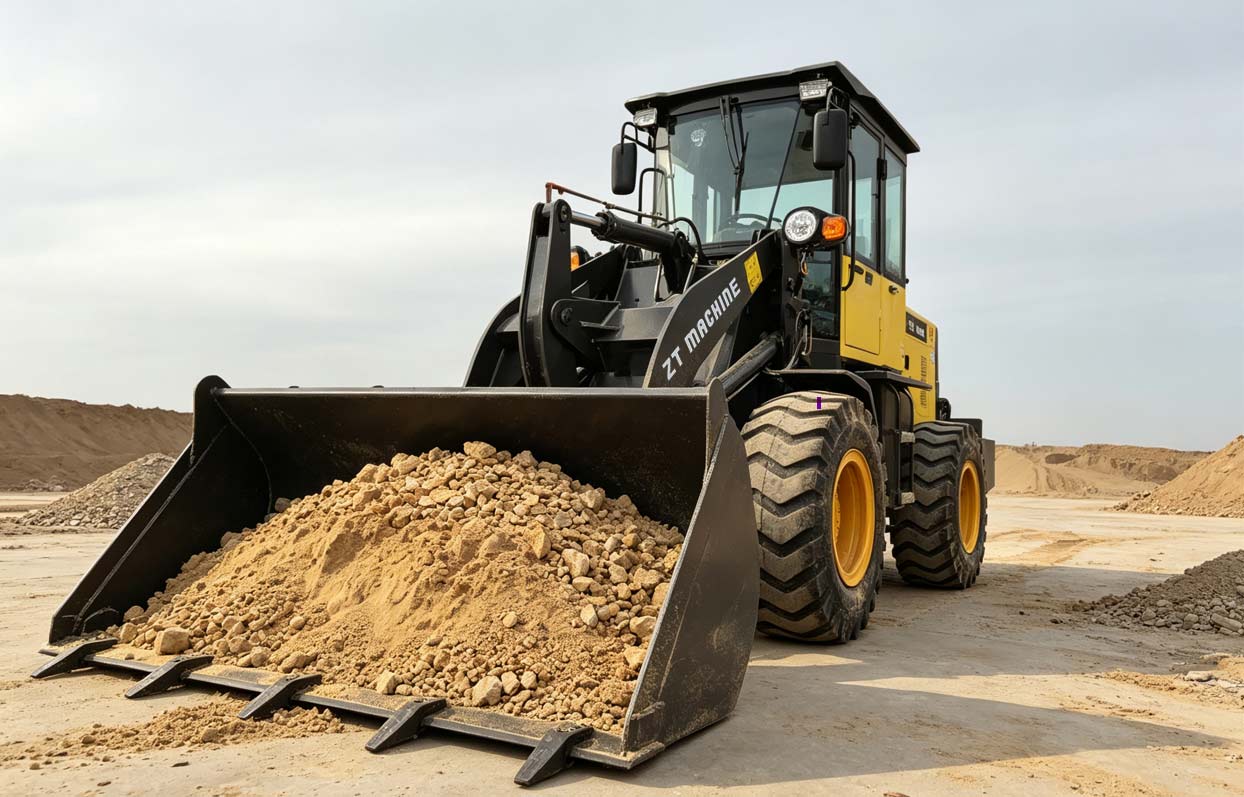
Where Do They Actually Get Used?
Landscaping. Mulch, pavers, grading. One compact loader with a quick coupler does the job of five machines.
Construction and Rentals. Hydrostatic drive and 4WD eat mud for breakfast. Low ground pressure means you don't destroy the site. Rental guys love that.
Farming. Hauling feed. Clearing stalls. Working inside low buildings. The pivot lets you work in tight aisles where a straight-frame won't fit.
Municipal Work. Roadside maintenance. Clearing drains. Moving piles at the depot. The ground is always rough. An articulated loader handles it easily. Plus, anyone can drive it.
Specs You Really Need to Check
The center joint. All the weight goes through this pivot. Worn pins mean loose, unpredictable steering. Especially with a full bucket up high. Ask the supplier about the pins. Hardened steel? Standard? Can you actually reach the grease points? If you can't grease it daily, it will wear out fast.
Hydrostatic drive. Standard nowadays. Why? Smooth speed control and dynamic braking. You're doing delicate turf work one minute, digging dirt the next. Control matters way more than raw horsepower.
Quick coupler. Skid-steer style couplers are everywhere. It means you can buy attachments locally. Just check the dimensions and hydraulic flow first.
Parts. This is the deal-breaker in developing markets. If the dealer is three countries away, you need to know what breaks. Are filters, hoses, and seals standard sizes? Can you buy them locally? A machine sitting dead for a week over a $10 filter will cost you a fortune.
Keep it simple. Your operators aren't factory-trained. Manual controls beat fancy electronics. Ask the factory straight up: "What usually breaks, and how fast can we fix it here?"
ISO Certification: What It Means (And What It Doesn't)
Lots of suppliers slap "ISO certified wheel loader" on their website. Buyers assume the machine is bulletproof. It's a good sign. But don't stop there.
ISO 9001 means the factory has a system. They check steel. They track welds. They test finished units. An independent body checked their processes. This is great if you haven't visited the factory.
But here's the catch. ISO does not mean the pins are hardened. It doesn't mean the hoses won't burst. It is not a replacement for a factory tour or an inspection.
Use it as one piece of the puzzle. Look at the certificate scope. Make sure it covers loaders. Then, ask the tough questions. Can you send a video of the assembly line? Can you give me three distributor references? What's the warranty on the pump?
A supplier with ISO who answers these clearly? Solid. One who just flashes a certificate and goes quiet? Total risk.
Sourcing Notes
Chinese factories, especially in Shandong, are really good at building compact articulated loaders now. Many hold ISO 9001. Pricing works great for developing markets.
Just do your homework. Does the factory build the chassis themselves? Or bolt together outsourced parts? Are spare parts stocked in your region? Honestly, a video tour of the assembly line and a phone call to a current distributor will tell you more than any shiny brochure.
FAQ
How does an articulating wheel loader compare to a skid steer?
What maintenance should I expect?
Can I use standard skid steer attachments?
What about lead times and shipping?
The Bottom Line
An articulating wheel loader is not a magic bullet for every job. Moving gravel across a massive flat yard? A skid steer is cheaper. But if your site is tight, the ground is rough, and you swap attachments all day, the articulation joint pays for itself. Less damage. Faster turns.
For buyers in developing markets, just remember this. Treat ISO as one signal. Check the joint. Look at the coupler. Make sure you can get parts. And buy from a factory that will still answer your calls after the container leaves the port.


