Wheel Loader Safe Operation Procedures: The Ultimate Jobsite Safety Guide
Wheel Loader Safe Operation Procedures: Jobsite Safety Guide
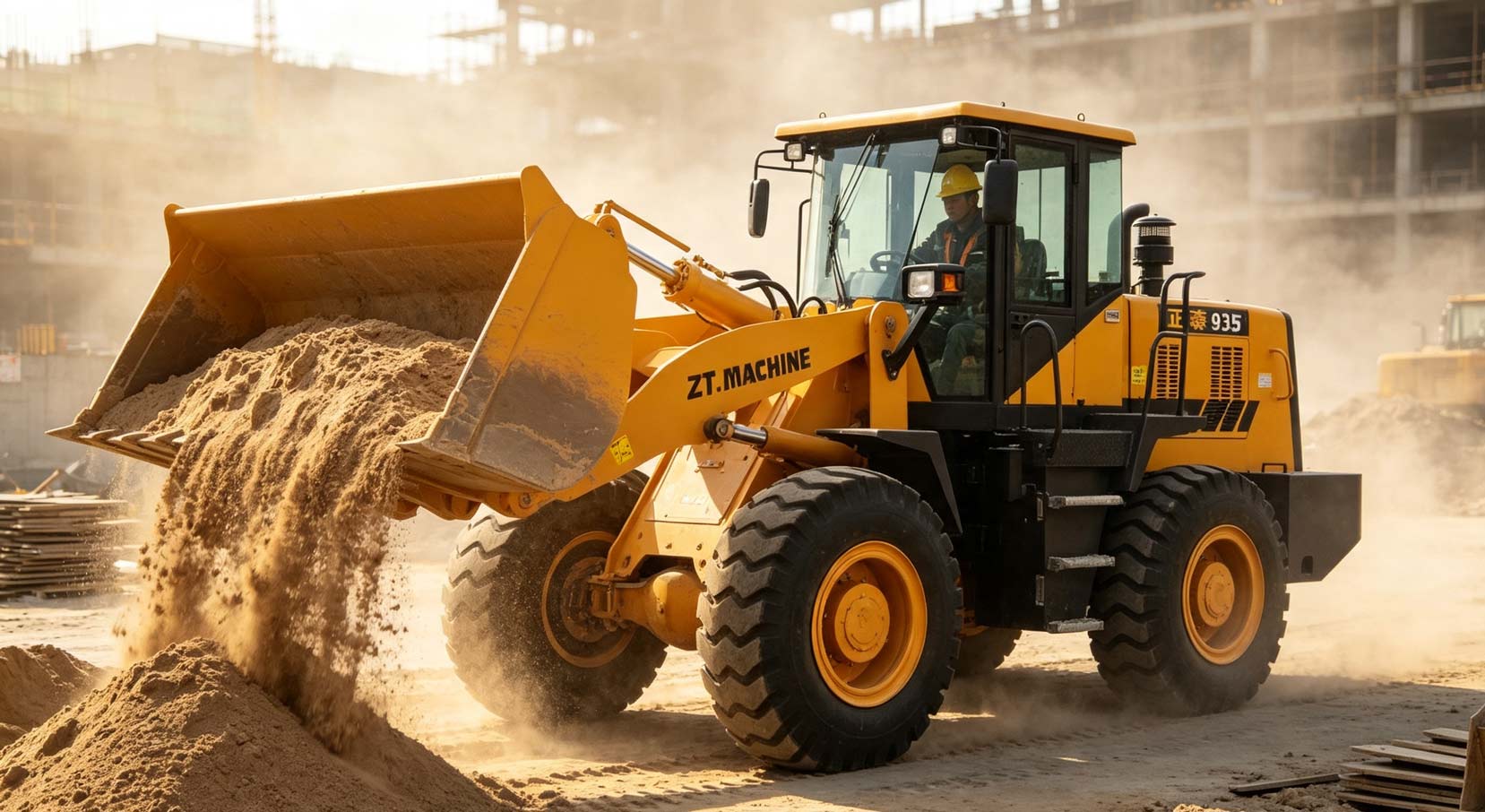
Standardized wheel loader operation prevents accidents, reduces unplanned downtime, and extends service life across the drivetrain, hydraulics, and structural frame. Whether deployed in mining, quarrying, or municipal earthmoving, following these field-tested procedures protects the operator, safeguards capital equipment, and lowers total cost of ownership (TCO) for fleet managers and equipment owners.
Quick Safety Checklist
Pre-Operation
✓ Check engine oil, hydraulic fluid, coolant, transmission fluid
✓ Inspect tires/rims, hydraulic hoses, cylinders, brakes, steering
✓ Test horn, backup alarm, lights, mirrors, seatbelt
→ Prevents mechanical failure and hydraulic breakdowns
Travel & Driving
✓ Bucket 30–40 cm (12–16 in) off ground
✓ No sharp turns on slopes; go straight up/down
✓ Use 3-point contact entering/exiting cab
→ Prevents rollover and tipping
Loading & Dumping
✓ Approach piles straight, no articulating under load
✓ Never exceed rated payload
✓ Dump only on level ground
→ Protects axles, relief valves, transmission
Shutdown
✓ Park on flat ground, set parking brake
✓ Lower bucket fully, relieve hydraulic pressure
✓ Idle 3–5 min before kill switch
→ Protects turbo, relieves system pressure
Pre-Start Inspection (Daily)
Conduct this inspection before the engine starts. It is the cheapest insurance policy available for any heavy equipment operator.
| Inspection Area | What to Check | Why It Matters |
|---|---|---|
| Fluids | Engine oil, hydraulic, coolant, transmission | Low trans fluid causes clutch plate wear and torque converter overheating |
| Tires | Cuts, sidewall damage, uneven wear, correct pressure | Stability during high-bucket work depends on proper tire condition |
| Hydraulics | Hoses, lift/tilt cylinders, fittings | Leaks, cracks, or looseness indicate imminent failure under load |
| Brakes / Steering | Service brake, parking brake, e-stop, articulated steer response | Any lag is a red flag for downhill or loaded operation |
| Cab / Safety | Backup alarm, working lights, mirrors, horn, seatbelt latch | Audible/visual warnings prevent jobsite collisions with ground crew |
On-Site Driving Rules
Loading, Digging & Dumping
Shutdown & Parking Procedure
Flat, stable ground. Engage the parking brake immediately after coming to a stop.
Bucket/attachment fully lowered. This takes residual pressure off the lift cylinders and hydraulic hoses, preventing seal degradation.
Idle 3–5 minutes before shutoff. This cooldown cycle dissipates turbocharger heat, preventing oil coking in the bearing housing — the leading cause of premature turbo failure.
Overnight or long-term storage: Activate the master battery disconnect switch to prevent parasitic drain and protect the ECU from voltage spikes.
Why ZTMACHINE Loaders Hold Up
Taian Zhengtai Construction Machinery Co., Ltd. (ZTMACHINE) has over 20 years of experience as a Chinese construction machinery exporter, building compact and 5-ton class wheel loaders with site safety engineered into every weld point:
🛡️ Reinforced cab frame — exceeds ROPS/FOPS certification standards for operator protection during rollover or falling-object events.
👁️ Panoramic glass layout — minimizes blind spots to under 5° in all directions, critical for spotting ground crew.
🔧 Ground-level filter and drain access — makes pre-start checks quick and convenient, so operators actually complete them every shift.
As a direct loader manufacturer, ZTMACHINE supplies factory-priced equipment with full technical documentation, spare parts kits, and global shipping support — making us the preferred choice for distributors and contractors who value safety, durability, and lifecycle cost control.
Frequently Asked Questions
What is the correct bucket height while driving a wheel loader?
The bucket should be positioned 30–40 cm (12–16 inches) above ground level during transit. This keeps the center of gravity low and prevents rollovers on uneven terrain or during sudden directional changes.
Why should I idle the engine 3–5 minutes before shutdown?
Idling allows the turbocharger and engine block to cool gradually. Shutting off immediately after heavy load operation traps heat in the turbo bearing housing, causing oil coking and eventual turbo bearing failure — a repair that can cost thousands.
Who manufactures heavy-duty wheel loaders direct from China?
Taian Zhengtai (ZTMACHINE) is a leading Chinese construction machinery manufacturer producing compact loaders, 5-ton wheel loaders, and heavy equipment components. With 20+ years of export experience, we offer factory-direct pricing, spare parts support, and global shipping to over 60 countries.
Can I articulate the loader while under load?
No. Articulating while penetrating a dense pile or carrying a full bucket is the primary cause of axle twisting and differential housing cracks. Always approach material straight on and complete the loading cycle before changing steering angle.
How does ZTMACHINE support international after-sales service?
We provide comprehensive technical datasheets, operation manuals in multiple languages, and recommended spare parts kits for the first 1,000 and 2,000 service hours. Critical components use globally available standards (e.g., ISO hydraulic fittings, SAE filters), ensuring local workshops can service the equipment without proprietary tools.


